

You are considering a machine that takes routine scooping off your chore list. That same machine has to fit in your apartment, cycle while you sleep, and be serviceable by a person crouching beside a toilet at 11 p.m. Get any one of those wrong and the convenience becomes a chore you paid for.
The regrets are rarely about the motor. They are about the two centimetres of clearance that were not in the listing, the cleaning cycle that interrupts sleep, and the filters you did not realize you would be reordering forever. This guide sticks to what can be checked before you buy: published dimensions, service clearance, noise figures where a manufacturer publishes them, and the consumables each model needs.
Why a Small Apartment Exposes Every Weak Specification
In a studio or a one-bedroom, a litter box may share a room with the places where you relax or sleep. There may be little flexibility to move it after purchase. A machine that fits an unused corner still needs an accessible approach for your cat and room for you to maintain it.
Pet Choice Compass compares manufacturer documentation rather than running hands-on tests. We have not measured noise, odour performance or reliability across these models. The six checks below help you identify what the exact model’s manual supports and which questions remain unresolved.
Dealbreaker 1: The Operating Footprint, Not the Listed Footprint
Overall dimensions describe the unit itself. Depending on the design, you may also need room around moving parts, access panels and removable components. The space an automatic litter box needs is its listed footprint plus the clearances in the exact model’s instructions.
- Measure the spot with a tape, not by eye, and mark it on the floor with painter’s tape.
- Add clearance on every side the manual specifies for the globe rotation or lid removal.
- Check ceiling and shelf height above the unit if a lid lifts upward.
- Confirm the exact unit’s manual rather than a similar model from the same brand, since clearances change between generations.
Check usable interior space separately. A compact exterior does not establish whether your cat has enough room to turn and position themselves. The Merck Veterinary Manual emphasizes room to dig and turn; do not use the machine’s overall dimensions as a substitute for the chamber measurements.
Dealbreaker 2: Cleaning Clearance Is a Second Footprint
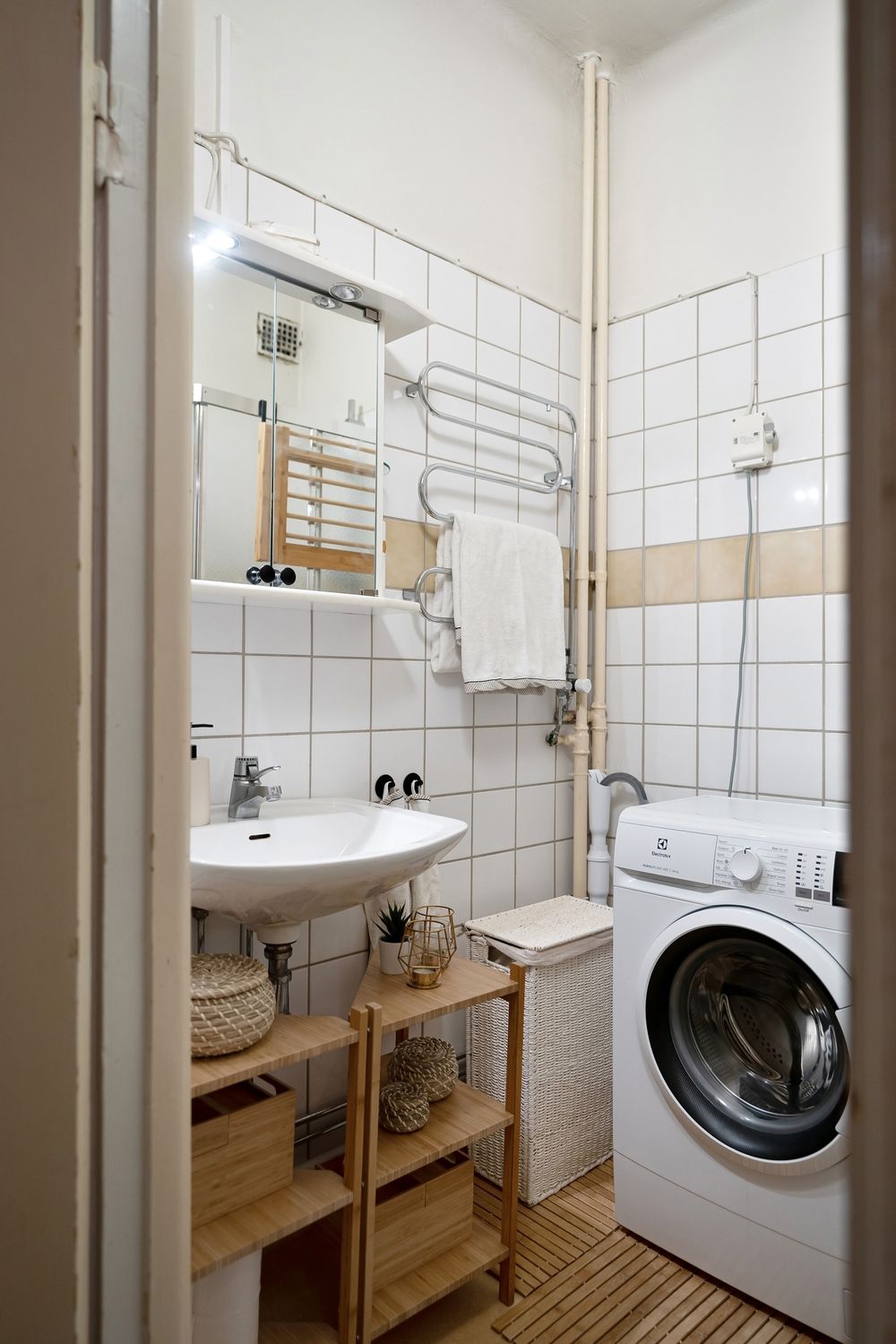
Emptying a waste drawer sounds like a ten-second job until the drawer only opens halfway because the wall is there. A small bathroom is a common home for these units, and bathrooms come with door swings, vanity overhangs, and a toilet occupying the floor space you were counting on.
Before buying, picture the routine: crouch down, open the waste compartment, remove the bag or tray, wipe the surfaces specified in the manual, and reassemble the unit. Check whether each step can be completed in the intended location. A setup that requires moving the machine every time creates an extra maintenance burden.
Dealbreaker 3: Noise, Judged From Your Pillow
A machine that sounds fine in a hallway sounds different two metres from your head at 3 a.m. Listen for more than the motor in any demonstration: litter movement, raking and bag-sealing mechanisms may contribute too. Check when cleaning begins after a visit and whether the exact model supports a delay or a scheduled quiet period. Detection and cleaning behaviour vary by design.
Look for a published decibel figure and its measurement conditions, rather than comparing unexplained numbers across brands. If the manufacturer does not publish noise data, treat that as an unanswered question. Check whether quiet-period settings require an app or connection, and whether the seller accepts returns on opened units.
Dealbreaker 4: Odour Containment Is a System, Not a Setting
Automatic boxes can be open or enclosed, and neither design label establishes odour performance. Read how the unit separates waste, stores it and handles filters or other consumables. A cover does not remove the need to empty waste and clean the unit.
Check the waste-compartment closure, any filter type and the manufacturer’s maintenance schedule. Where carbon filters are used, include them in the running costs and confirm that replacements can be ordered to your address.
Placement conditions matter too. For its ScoopFree crystal system, PetSafe warns that humidity can shorten litter and disposable-tray life. That guidance is specific to the system described; use the manual for the model you are considering before choosing a bathroom location.
Dealbreaker 5: Maintenance Access and the Parts You Cannot Source
Waste-compartment capacity, bag style and access for deep cleaning affect the day-to-day workload. Proprietary liners, trays or bags can also limit where you buy replacements. Check which parts are washable, how they detach and where you can safely clean and dry them.
Pet Choice Compass tracks manufacturer specs across 21 automatic models from brands including CATLINK, Meowant, Casa Leo, Neakasa and PETKIT. Where documentation is incomplete or conflicts between sources, we flag it rather than filling the gap with a guess. If a replacement part is not listed, ask the manufacturer whether it is available for the exact model and your region. An unanswered support question is a reason to wait, rather than assume the part can be supplied later.
Dealbreaker 6: Cat Comfort and Sensor Reliability
A machine that fits your apartment but not your cat is still the wrong purchase. Check entry height, usable interior room and the litter type the unit accepts. Our senior-cat guide explains why entrance and exit access need their own assessment.
Read the automatic-operation limits and detection instructions, including minimum age or weight, installation surface and what happens if a cat approaches during cleaning. Very small cats may fall below a model’s automatic-detection threshold; this is an operating restriction, not permission to use it normally. Whisker’s Litter-Robot 4 FAQ is one example of separate kitten-use instructions.
Confirm the behaviour of the exact unit with its manufacturer. Never bypass sensors. If a unit moves while an animal is inside when it should have stopped, stop automatic use and contact the manufacturer before relying on it again.
Add a Twelve-Month Running-Cost Check
The purchase price is only part of the total. Depending on the design, you may also need filters, liners, bags, proprietary trays or replacement parts. Emptying frequency depends on the unit, the litter and how many cats use it; apartment size alone does not determine the maintenance schedule.
Pet Choice Compass does not publish prices. Use current costs from suppliers serving your region, and read our seven-check buying guide for the broader ownership questions. Build your own twelve-month total instead: purchase price, plus consumables at the manufacturer’s recommended replacement interval, plus shipping if the parts come from one supplier.
What to Compare Before You Buy
| Dealbreaker | What actually matters | Where to confirm it | What buyers miss |
|---|---|---|---|
| Operating footprint | Overall dimensions plus specified clearances | Exact model’s manual or spec sheet | External moving parts and service panels may need extra room |
| Cleaning clearance | Waste-compartment access and lid removal space | Manual diagrams | Listed dimensions do not show the room needed to remove parts |
| Noise | Cycle sound, delay and any quiet-period settings | Manufacturer documentation and return terms | Settings and noise measurement conditions vary |
| Odour control | Drawer seal, filter type, delay setting | Manual and consumable listings | Filters are recurring purchases |
| Maintenance access | Drawer volume, bag style, globe removal | Manual | Proprietary supplies may limit replacement options |
| Cat fit | Weight range, entry height, litter type | Manual | Small cats may not trigger the sensor |
| Running costs | Consumables and part availability | Manufacturer parts pages | Consumables and shipping add to the purchase price |
Matching the Machine to Your Space
Different layouts place different demands on the same machine. Decide which requirements are essential before comparing features. A compact footprint does not establish quiet operation or easy maintenance.
| Your space | First priority | Second priority | Verify first |
|---|---|---|---|
| Studio | Noise | Odour containment | Decibel figure, quiet hours, filter supply |
| Small bathroom | Cleaning clearance | Ventilation and moisture | Door swing, drawer travel, lid removal |
| Bedroom or light sleeper | Cycle noise | Cleaning timing | Any quiet-period setting, delay and its requirements |
| One-bedroom, two cats | Drawer capacity | Cycle frequency | Multi-cat guidance in the manual |
If the unit will be near a sleeping area, consider sound and cycle timing alongside access, maintenance and the cat’s needs. In a tight bathroom, confirm service clearance and placement conditions before focusing on appearance.
The Choice Compass can rank documented overall dimensions and other selected preferences. It does not currently score operating clearance, cleaning access, noise or odour performance. Its space preference influences ranking rather than excluding a model; verify these additional checks yourself.
When a Manual Tray Makes More Sense
A manual tray avoids motor noise and powered cleaning cycles, but it still needs usable interior room, regular cleaning and an accessible location. If you cannot provide the automatic unit’s operating and maintenance clearances, a suitable manual tray may be the more practical choice.
Avoid choosing a box solely because it is easy to conceal. Cats Protection recommends a quiet, accessible location, separated from food, water and sleeping areas. Hiding the unit behind furniture is unhelpful if it makes the cat’s route or your cleaning access difficult.
A Pre-Purchase Check You Can Do at Home
- Tape the footprint plus swing clearance on the floor and live with it for a day.
- Confirm the exact unit’s manual, not a similar model’s page.
- Find the published weight range and check it against your smallest cat.
- Check whether a noise figure exists and whether quiet hours can be scheduled.
- Price twelve months of filters and liners.
- Confirm a replacement part can be ordered to your address.
Frequently Asked Questions
How do I hide a litter box in a small apartment?
Start by checking whether the manufacturer permits furniture enclosures. Keep the specified operating and maintenance clearances, placement conditions and an accessible route for your cat. Do not assume that a cabinet designed for a manual tray also suits a powered unit. A discreet position is useful only if the cat can reach it and you can clean it properly.
Is it unhealthy to sleep in the same room as a cat litter box?
This guide does not assess indoor-air exposure or establish that a particular bedroom setup is healthy. Keep waste and cleaning routines within the manufacturer’s instructions, and ask a healthcare professional about health concerns related to your room. For your cat’s layout, Cats Protection recommends keeping litter separate from sleeping, feeding and drinking areas; that is placement guidance, not a human-health assessment.
Do vets recommend covered litter boxes?
There is no single design that suits every cat. The Merck Veterinary Manual notes that open boxes allow more air circulation and that individual cats differ in their acceptance of enclosed spaces. A cover does not establish comfort or odour performance. Discuss access or toileting problems with your veterinarian.
Is a self-cleaning litter box worth it in a small apartment?
That depends on your priorities, not on a universal answer. If noise and clearance fit your space and you will keep up with the drawer and filters, the convenience is real. If the unit barely fits and cycles beside your bed, a suitable manual tray may be easier to live with. Compare published specs against your room first.
Will an automatic litter box fit in a small bathroom?
Possibly, but only if you measure the operating footprint rather than the listed one. Add the drawer travel and lid clearance from the manual, then account for the door swing and any vanity overhang. If those numbers do not leave a comfortable crouching space, a bathroom is the wrong location for that model.
Sources and Further Reading
- Merck Veterinary Manual: Providing a litter box for a cat.
- Cats Protection: Cats and toileting.
- PetSafe: ScoopFree crystal-system litter life and humidity. Other ScoopFree models have different requirements.
- Whisker: Litter-Robot 4 operating and kitten-use FAQ.